Substitutes for Sugar in Baking
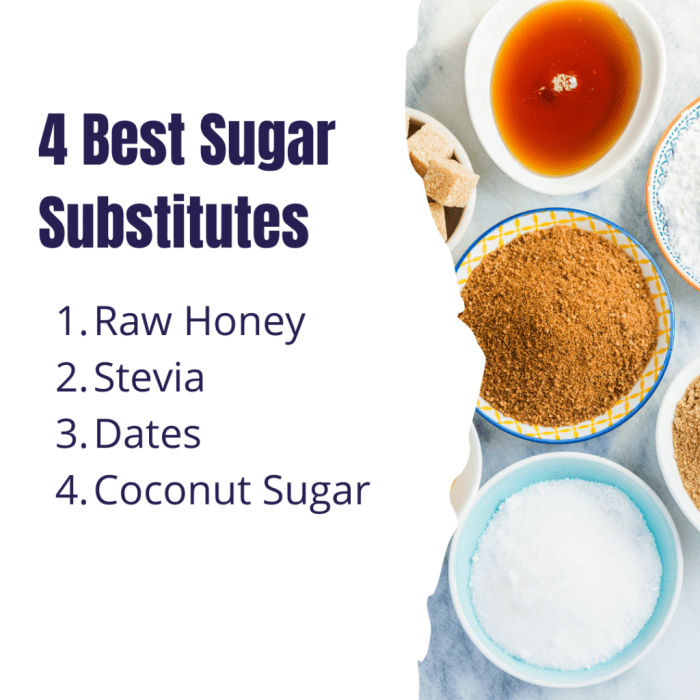
Substitutes for sugar in baking offer a world of possibilities for bakers seeking healthier or specialized options. This exploration delves into the diverse landscape of natural and artificial sweeteners, examining their impact on texture, flavor, and nutritional value. We’ll uncover effective sugar reduction techniques, explore suitable substitutes for various dietary needs, and even share some delicious recipes to inspire your baking journey.
From the subtle sweetness of stevia to the familiar taste of applesauce, we’ll navigate the complexities of replacing sugar without compromising taste or texture. We will also address the potential health implications of different sweeteners, providing a balanced perspective to empower informed choices in your kitchen.
Natural Sugar Substitutes in Baking
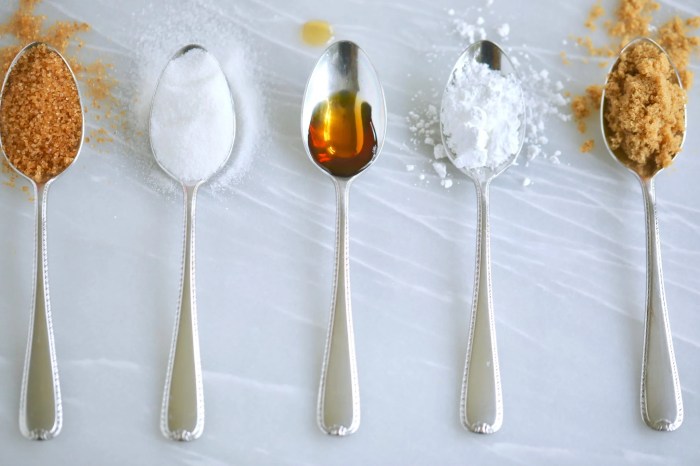
Choosing the right sugar substitute can significantly impact the outcome of your baked goods. While artificial sweeteners offer intense sweetness, natural alternatives often provide more nuanced flavors and textures, albeit with some trade-offs. Understanding the properties of different natural sweeteners is crucial for successful sugar-free baking.
Comparison of Stevia, Erythritol, and Monk Fruit
The following table compares three popular natural sugar substitutes: stevia, erythritol, and monk fruit. Each possesses unique characteristics affecting sweetness, texture, and potential drawbacks in baking applications. Careful consideration of these factors is essential for achieving desired results.
| Property | Stevia | Erythritol | Monk Fruit |
|---|---|---|---|
| Sweetness (relative to sugar) | 200-300x | 60-80% | 100-150x |
| Texture Impact | Can have a slightly bitter aftertaste; may require blending with other sweeteners. | Granular texture similar to sugar; generally blends well. | Slightly sweeter than sugar, may leave a subtle aftertaste; blends well. |
| Potential Drawbacks | Bitter aftertaste in high concentrations; may not brown well. | Can cause digestive upset in large quantities; may not caramelize. | Can be expensive; may not be suitable for all baking applications. |
Fruit Purees as Sugar Substitutes, Substitutes for sugar in baking
Fruit purees, such as applesauce and banana puree, offer a natural way to reduce sugar in baked goods while adding moisture and subtle sweetness. However, their impact on texture and flavor varies depending on the type of puree and the recipe. Using them successfully requires understanding how they interact with other ingredients.
The following points illustrate the effectiveness of fruit purees in different baked goods:
- Applesauce: Works well in muffins, cakes, and quick breads, adding moisture and a mild sweetness. It can slightly alter the texture, making the baked goods denser and moister. A recipe for apple cinnamon muffins could easily incorporate applesauce to reduce the amount of sugar needed.
- Banana Puree: Adds moisture and sweetness to muffins, quick breads, and even cookies. Its strong banana flavor is more pronounced than applesauce, so it’s best suited for recipes where the banana flavor complements the other ingredients. Banana bread, naturally, benefits greatly from this substitution.
- Other Purees: Pumpkin puree and sweet potato puree can also be used as sugar substitutes, particularly in recipes where their flavors are complementary. Pumpkin pie, for instance, can incorporate a reduced amount of sugar when pumpkin puree is used liberally.
Sugar-Free Chocolate Chip Cookies
This recipe uses a combination of erythritol and monk fruit to create sugar-free chocolate chip cookies with a pleasant texture and taste.
Ingredients:
- 1 cup (2 sticks) unsalted butter, softened
- 1/2 cup erythritol, granulated
- 1/4 cup monk fruit sweetener, granulated
- 2 large eggs
- 1 teaspoon vanilla extract
- 2 1/4 cups all-purpose flour
- 1 teaspoon baking soda
- 1/2 teaspoon salt
- 2 cups semi-sweet chocolate chips (sugar-free preferred)
Instructions:
- Preheat oven to 375°F (190°C). Line baking sheets with parchment paper.
- Cream together the softened butter, erythritol, and monk fruit sweetener until light and fluffy.
- Beat in the eggs one at a time, then stir in the vanilla.
- In a separate bowl, whisk together the flour, baking soda, and salt.
- Gradually add the dry ingredients to the wet ingredients, mixing until just combined. Be careful not to overmix.
- Stir in the chocolate chips.
- Drop by rounded tablespoons onto the prepared baking sheets.
- Bake for 9-11 minutes, or until the edges are lightly golden brown.
- Let cool on the baking sheets for a few minutes before transferring to a wire rack to cool completely.
Artificial Sugar Substitutes in Baking: Substitutes For Sugar In Baking
Artificial sweeteners offer a sugar-free alternative in baking, appealing to those watching their sugar intake. However, understanding their potential health implications and baking performance is crucial for informed decision-making. This section explores the use of artificial sweeteners in baking, focusing on their effects on health, baking applications, and sensory impact.
Potential Health Implications of Artificial Sweeteners
The long-term effects of consuming artificial sweeteners like aspartame and sucralose remain a subject of ongoing research and debate. While generally recognized as safe by regulatory bodies in moderate amounts, some studies have linked their regular consumption to potential health concerns. These include concerns about gut microbiome disruption, increased risk of certain metabolic disorders, and possible links to neurological issues, although more research is needed to establish definitive causal relationships.
Individual responses vary, and those with pre-existing health conditions should consult a healthcare professional before incorporating significant amounts of artificial sweeteners into their diet. It’s crucial to remember that moderation is key, and artificial sweeteners should not be considered a license for excessive calorie consumption from other sources.
Baking Applications of Artificial Sweeteners
Artificial sweeteners excel in applications where intense sweetness is desired with minimal volume increase. They are particularly effective in recipes like sugar-free jams, jellies, and some candies. However, they are less suitable for recipes that rely on sugar for browning, texture, and moisture retention, such as cakes and cookies. Sugar’s role in Maillard reactions (browning) and its contribution to the final texture are difficult to replicate completely with artificial sweeteners.
For instance, while you can make sugar-free cookies, they may lack the same texture and browning as their sugar-containing counterparts. The use of sugar alcohols, such as erythritol and xylitol, can partially mitigate some of these issues, but complete equivalence is rarely achieved.
Taste and Texture Impact of Artificial Sweeteners in Cakes
The taste and texture of cakes made with artificial sweeteners can vary significantly depending on the specific sweetener used. The following table summarizes the observed effects of three common artificial sweeteners in cakes:
| Sweetener | Sweetness Intensity | Taste Impact | Texture Impact |
|---|---|---|---|
| Aspartame | High | Slightly bitter aftertaste in some individuals; generally considered clean tasting at lower concentrations. | May result in slightly drier crumb; often requires additional moisture adjustments. |
| Sucralose | High | Generally considered clean tasting; may have a slight lingering sweetness. | Similar to aspartame, can lead to a drier crumb, requiring adjustments to recipe moisture. |
| Stevia | High | Can have a distinct licorice-like aftertaste, which can be off-putting to some. Requires careful balancing in recipes. | May result in a slightly denser crumb compared to sugar-based cakes. |
Sugar Reduction Techniques in Baking
Reducing sugar in baked goods without compromising taste and texture is achievable through various techniques. Careful substitutions, ingredient adjustments, and baking modifications can create delicious and healthier treats. Understanding the role sugar plays in baking—from sweetness and browning to moisture retention and structure—is key to successful reduction.
Methods for Reducing Sugar in Baking Recipes
Several methods allow for sugar reduction without drastically altering the final product. These involve substituting some sugar with alternative sweeteners, increasing the intensity of other flavors to compensate for reduced sweetness, or leveraging the natural sweetness of ingredients. For instance, using ripe bananas or applesauce in cakes adds natural sweetness and moisture, partially offsetting the need for refined sugar.
Similarly, enhancing the spices in gingerbread cookies can mask the reduced sweetness while adding complexity to the flavor profile. In some recipes, a portion of the sugar can be replaced with unsweetened applesauce or mashed banana, which also adds moisture. Another approach is to use sugar alcohols, such as xylitol or erythritol, though it’s crucial to note that these can have different baking properties than granulated sugar and may require recipe adjustments.
Adjusting Baking Recipes for Reduced Sugar Content
Decreasing sugar content often necessitates adjustments to baking time and temperature. Reduced sugar results in less browning and a potentially moister final product. Therefore, baking times might need to be shortened to prevent overbaking, and temperatures may need to be slightly lowered to avoid burning. For example, a cake recipe with 25% less sugar might require a reduction in baking time by 5-10 minutes and a temperature decrease of 10-15°F (5-8°C).
Cookies, with their lower moisture content, may require less adjustment, but careful monitoring for browning is still crucial. A reduction in sugar content can also affect the final texture; cakes may be slightly less fluffy, and cookies may be less crisp. Careful experimentation is key to finding the optimal balance.
Step-by-Step Guide for Modifying a Standard Cake Recipe to Reduce Sugar by 25%
This guide modifies a standard cake recipe to reduce sugar by 25%, considering moisture and texture changes. Assume the original recipe calls for 1 cup of sugar.
- Step 1: Calculate Sugar Reduction: Reduce the sugar by 25%: 1 cup x 0.25 = 0.25 cups. This means you’ll use 0.75 cups of sugar instead of 1 cup.
- Step 2: Compensate for Moisture: Since sugar contributes to moisture, add 1-2 tablespoons of unsweetened applesauce or mashed banana to help maintain moisture. The exact amount will depend on the recipe and desired consistency.
- Step 3: Adjust Baking Time and Temperature: Reduce the baking time by 5-10 minutes and lower the oven temperature by 10-15°F (5-8°C). Monitor the cake closely and use a toothpick to check for doneness.
- Step 4: Test and Adjust: Bake a small test cake first to determine the optimal baking time and temperature. Adjust the recipe accordingly based on the results of the test bake. Consider the crumb structure, moisture level, and overall taste.
- Step 5: Enhance Flavors: To compensate for the reduced sweetness, consider enhancing other flavors. This could involve increasing the amount of vanilla extract, adding a touch of citrus zest, or using stronger spices. Experiment to find a balance that complements the reduced sweetness.
Ultimately, the best sugar substitute depends on individual preferences, dietary needs, and the specific baked good. By understanding the properties of various options and employing effective sugar reduction techniques, you can create delicious and satisfying treats that align with your health goals. Experimentation is key; don’t be afraid to try different combinations and discover your own perfect sugar substitute!
FAQ Section
Can I substitute sugar entirely with a single alternative?
Often, a blend of substitutes works best to mimic sugar’s properties. One might not replicate sweetness, texture, and browning all at once.
How does using sugar substitutes affect baking time and temperature?
It often requires adjustments. Some substitutes may result in a moister bake, potentially requiring a shorter baking time or lower temperature. Experimentation is key.
Are all sugar substitutes suitable for all dietary restrictions?
No. Check ingredient labels carefully as some substitutes may contain allergens or may not be suitable for keto or vegan diets.
What are the potential long-term effects of consuming artificial sweeteners?
Research on the long-term effects is ongoing and inconclusive. Moderate consumption is generally advised. Consult a healthcare professional for personalized advice.